What Is Reformation Day, and Why Should Christians Still Care?
Every October 31, Protestant churches remember a monk, ninety-five arguments, and the oldest question in religion: how can a sinner be right with a holy God?
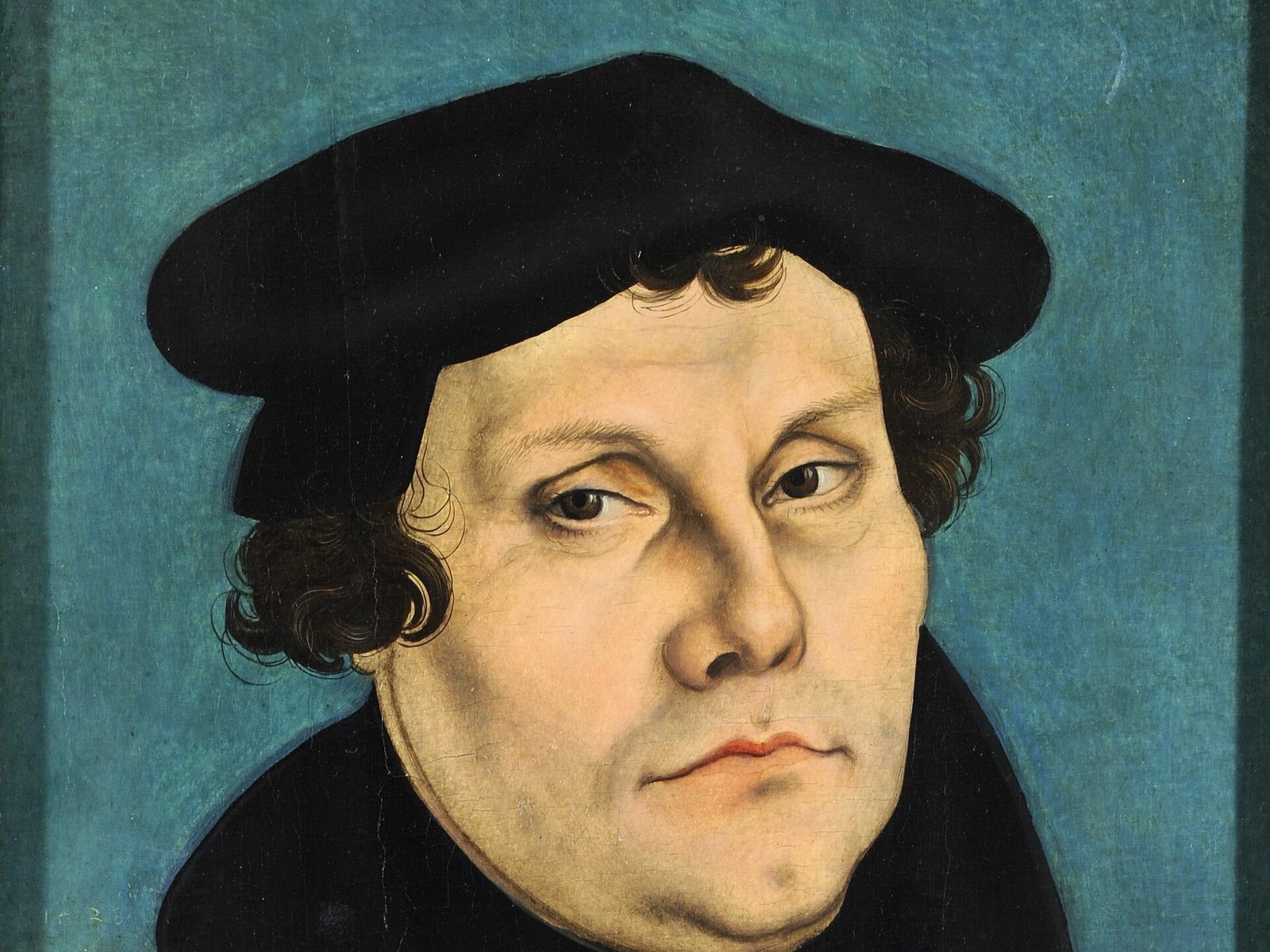
On October 31, 1517, Martin Luther sent his Ninety-five Theses, with a letter, to Albert, Archbishop of Mainz. The letter survives. The scene at the door of the Castle Church in Wittenberg is less certain. Our earliest account of it comes from Philip Melanchthon, who did not reach Wittenberg until 1518, and historians have debated since the 1960s whether the theses were posted at all. Hammer or mail, the result was the same.
What happened in 1517
Luther was a priest and a Bible professor at the University of Wittenberg. The church of his day sold indulgences, certificates that promised to shorten a soul's time in purgatory. Buyers were told their dead could be released. In Albert's lands the money was split between the archbishop and the pope, who was raising funds to build St. Peter's in Rome. Luther watched his own parishioners travel to buy them, and he would not keep quiet.
Luther wrote the theses in Latin, for academic debate. He went after the sale of indulgences and the false peace it sold with them. His first thesis reads: "When our Lord and Master Jesus Christ said, 'Repent,' he willed the entire life of believers to be one of repentance." No one buys repentance. It marks the whole Christian life, turned toward God.
Within weeks the theses were printed, translated, and read across Germany. Luther had not yet worked out all he would later teach, but the question was out, and the church could not ignore it.
What was at stake
Indulgences were the occasion. The Gospel was the issue.
Luther came to see what Paul had written plainly: "For in it the righteousness of God is revealed from faith for faith, as it is written, 'The righteous shall live by faith'" (Romans 1:17). The righteousness a sinner needs is not one he builds. God gives it, and the sinner receives it by faith in Christ.
Paul says the same thing elsewhere: "For we hold that one is justified by faith apart from works of the law" (Romans 3:28). And: "For by grace you have been saved through faith. And this is not your own doing; it is the gift of God, not a result of works, so that no one may boast" (Ephesians 2:8–9).
A gift cannot be sold. A finished work cannot be added to. If God declares the ungodly righteous for the sake of his Son, then no priest, no payment, and no merit of ours stands between the sinner and the cross.
The five solas
Later Protestants summed up the Reformation's teaching in five Latin phrases. Luther did not write them as a list in 1517, but they state what the church recovered:
- Scripture alone. The Bible is the only infallible rule of faith and life. "All Scripture is breathed out by God and profitable for teaching, for reproof, for correction, and for training in righteousness" (2 Timothy 3:16).
- Grace alone. God saves sinners by his unearned favor, not by anything in them.
- Faith alone. We are justified through faith, not by works.
- Christ alone. "For there is one God, and there is one mediator between God and men, the man Christ Jesus" (1 Timothy 2:5). There is no other mediator, and we need none.
- To the glory of God alone. Salvation is God's work from beginning to end, so the praise belongs to him.
Remove any one of these and you no longer have the Gospel.
Why it still matters
Rome stopped selling indulgences in the 1500s, but it still grants them; it offered a special one for the 2025 Jubilee. And the heart that wanted to buy them is still with us. We still want God to accept us because we prayed enough, served enough, gave enough, or felt sorry enough. Every one of us is born wanting to pay our own way.
Biblical counseling sees this all the time. People bring problems, but under the problems they bring guilt. Some carry it in the open. Others hide it under anxiety, anger, or a restless need to prove themselves. A better technique will not touch that guilt. Justification will: God's verdict, given once for all, that the sinner who trusts Christ is righteous in his sight.
A believer who knows he is justified can look at his sin honestly, because his standing with God does not rest on his performance. He can repent without despair, because the debt is paid. Luther found that freedom in Romans, and the Gospel still gives it.
This is also why the Reformation put the Bible back in the hands of ordinary people. If Scripture alone is the rule of faith, every Christian must be able to read it and every pastor must preach it. The church does not stand over the Word. The Word stands over the church.
October 31 in a Christian home
Reformation Day falls on the same night as Halloween. Christians handle that evening in different ways, and each family must decide before God what it will do.
Whatever you decide about the evening, remember the day. A few ways to do it:
- Read Romans 1:16–17 and 3:21–28 aloud as a family, and ask your children what Paul says a person must do to be right with God.
- Sing "A Mighty Fortress Is Our God." Luther wrote it from Psalm 46: "God is our refuge and strength, a very present help in trouble" (Psalm 46:1).
- Tell the story. Tell your children about a man who was terrified of God's judgment until he read what God had promised.
Why we remember
We do not keep Reformation Day to honor a man. Luther was a sinner, and he would have said so first. We keep it because God, in his kindness, brought his church back to his Word.
The question of 1517 is yours too. How will you stand before a holy God? Not with your works, your religion, or your record. Only with Christ, received by faith, whom God has freely given.
To learn what we believe, read our Statement of Faith. You can also listen to our sermons or read more about Nacmin.
Support this work
Nacmin's articles, sermons, and counseling are supported by people who want the church equipped with God's Word. If this article helped you, please consider becoming a monthly partner. Your gift keeps this teaching going.
Scripture quotations are from the ESV® Bible.

Jeremy Menicucci
Author
Jeremy Menicucci is a biblical counselor and apologist based in Albuquerque, NM. He specializes in nouthetic counseling and Christian apologetics, helping believers apply Scripture to everyday life.
View all posts by Jeremy Menicucci